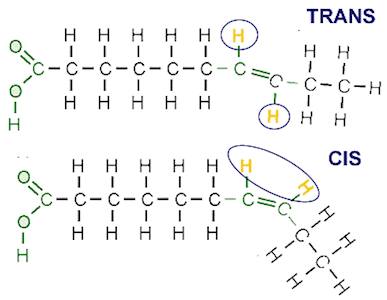
Naturally occurring fatty acids are found exclusively in two forms: the cis and trans forms. What distinguishes these two forms is the mutual arrangement of the hydrogen atoms bonded to the carbon atoms. Specifically, when two carbon atoms are bonded together by a double bond (and we are therefore talking about unsaturated fatty acids) and the hydrogen bonded to the first is on the same side as the hydrogen bonded to the second, the fatty acid is in cis conformation. If this is not the case, i.e. when the two hydrogen atoms are on different sides of the carbon chain, we speak of a trans fatty acid.
Most natural fatty acids are in cis conformation. Exceptions to this rule are some animal products, such as milk and dairy products, as small amounts of trans fatty acids are formed in the stomachs of ruminants as a result of the action of certain bacteria. In reality, however, much of the food that the average person usually consumes is rich in trans fatty acids. In fact, increasing the amount of trans fatty acids in food can be achieved by an artificial process called catalytic hydrogenation. This process involves adding hydrogen gas to the starting oils in the presence of inorganic catalysts (such as finely dispersed nickel and platinum). The heat applied during this process promotes the breaking of double bonds and their subsequent saturation with hydrogen. When hydrogenation is not complete, fatty acids in trans conformation are formed. Industries tend to seek out the hydrogenation of fats mainly because of the fact that when a fatty acid is in its trans form it can be stored for longer, but also because trans fatty acids have greater firmness and ‘spreadability’ characteristics than cis fatty acids. Trans fatty acids, however, have a known deleterious effect on an individual’s health in that they increase the blood concentration of LDL and decrease that of HDL (for more details on LDL and HDL, the reader is referred to the appendix on lipoproteins and cholesterol). Hydrogenated fats are strongly represented in various snacks, spreads and margarine.